
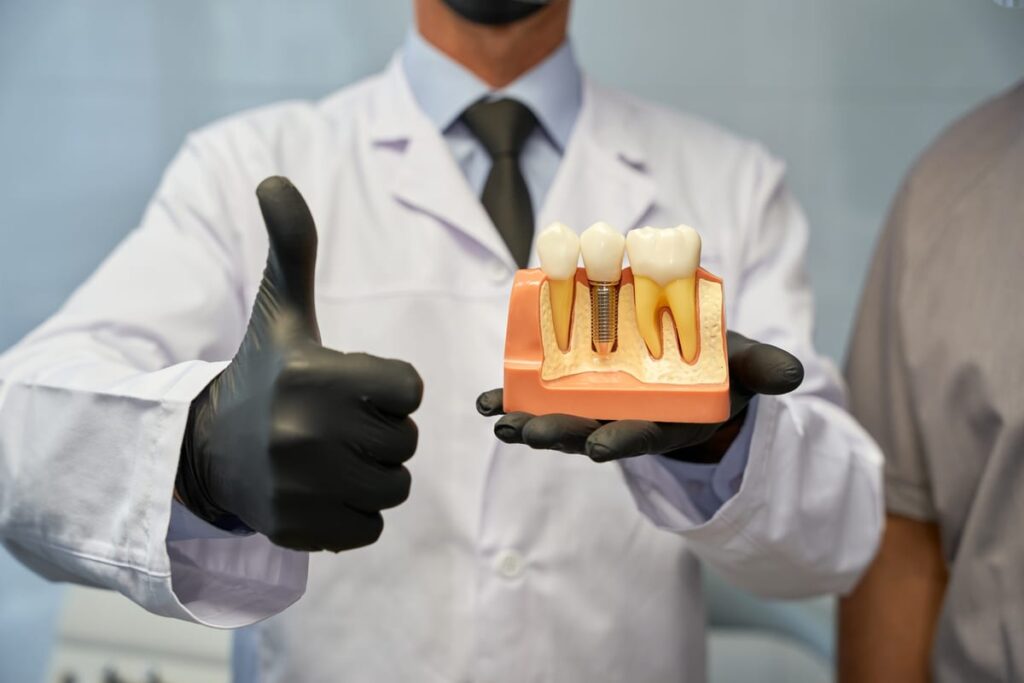
If you have a missing tooth, you have probably wondered about dental implants. Many Tullahoma patients ask us the same thing: Am I a good candidate for dental implants? It is one of the most important questions you can ask before starting treatment. The answer depends on several personal health factors that go well beyond your smile. In this guide, we walk you through five honest questions to help you understand your candidacy.
Question One: Is Your Jawbone Strong Enough to Support an Implant?
Dental implants are titanium posts that fuse directly into your jawbone. This process is called osseointegration. Your jawbone must have enough density and volume to hold the implant securely. Without adequate bone, the implant may fail to integrate properly.
Bone loss is common after a tooth is extracted. The longer a tooth has been missing, the more bone density you may have lost. A 3D cone beam scan helps Dr. Kim Glick evaluate your bone health. If you have bone loss, a bone graft procedure may restore enough structure to make implants possible.
Don’t assume bone loss automatically disqualifies you. Many Tullahoma patients have received bone grafts and gone on to enjoy successful Dental Implant Restoration. The key is getting a proper evaluation first.
Question Two: Are Your Gums Healthy Enough for Implant Surgery?
Healthy gums are essential for dental implant success. Gum disease creates bacterial environments that can infect an implant site. Untreated periodontal disease is one of the leading causes of implant failure. You must address any gum issues before moving forward with implants.
Signs of gum disease include bleeding when you brush, persistent bad breath, and gum recession. If you notice any of these symptoms, mention them during your consultation. Dr. Glick offers comprehensive periodontal care to treat gum disease before implant placement. Getting your gums healthy first greatly improves your long-term outcomes.
- Swollen or tender gums may indicate active infection
- Receding gums expose tooth roots and signal bone loss
- Loose teeth are a late-stage sign of periodontal disease
- Regular cleanings help keep gum disease under control
Once your gum health is restored, implants often become a viable option. Addressing this step is not a setback — it is smart preparation.
Question Three: Do Any Health Conditions Affect Your Candidacy?
Certain health conditions can influence how your body heals after implant surgery. Diabetes, autoimmune disorders, and osteoporosis are among the most commonly discussed. These conditions do not always rule out implants entirely. However, they do require careful management and honest disclosure during your consultation.
Patients with well-controlled diabetes often heal well after implant placement. Uncontrolled blood sugar slows healing and raises infection risk. If you manage a chronic condition, let Dr. Glick know during your initial visit. She works closely with patients to assess individual risk factors before recommending treatment.
Some medications also affect bone metabolism. Bisphosphonates, used for osteoporosis, may interfere with bone healing after surgery. Always share a full list of your current medications. This helps the team at Glick & Woods Dentistry make the safest recommendation for your situation.
Jaw joint concerns are another factor worth discussing. If you experience jaw pain or clicking, that may point to temporomandibular disorders (TMD), which should be evaluated before implant work begins.
Question Four: Does Your Age Play a Role in Implant Candidacy?
Age is a common concern for patients on both ends of the spectrum. Younger patients may not yet have finished jaw development. Dental implants placed before the jaw is fully grown can shift out of position over time. Most dental professionals recommend waiting until the late teens or early twenties.
Older adults, on the other hand, are often excellent implant candidates. Age alone does not disqualify you. What matters most is your overall health and bone density. Many patients in their 70s and 80s have successfully received implants in Tullahoma.
- Jaw development typically completes between ages 17 and 21
- Bone density naturally decreases with age but can still support implants
- Overall health and healing ability matter more than age alone
- A thorough evaluation determines suitability at any age
Question Five: Are You a Smoker or Tobacco User?
Smoking significantly impacts your ability to heal after implant surgery. Tobacco restricts blood flow to the gums and bone tissue. This slows healing and raises the risk of implant failure. Studies consistently show higher failure rates among smokers compared to non-smokers.
That said, smoking does not automatically eliminate you as a candidate. Many Tullahoma patients have successfully received implants after quitting tobacco. Dr. Glick encourages patients to stop smoking at least a few weeks before surgery. Staying smoke-free during the healing period is especially important.
If you are committed to quitting, implants may still be within reach. Be honest with your dental team about your tobacco use. This transparency allows them to plan the safest and most effective course of treatment for you.
What Happens During Your Implant Consultation at Glick & Woods Dentistry?
A dental implant consultation is not a sales pitch. It is a thorough health evaluation designed to protect you. Dr. Kim Glick reviews your medical history, takes diagnostic imaging, and examines your gums and bone. You leave with a clear picture of your options and next steps.
Here is what to expect during your visit:
- A review of your medical history and current medications
- Digital X-rays or a 3D cone beam scan of your jaw
- A clinical exam of your gums and remaining teeth
- A discussion of treatment options tailored to your needs
- A chance to ask all the questions you have been wondering about
There is no pressure and no rush. The goal is to give you accurate information so you can make a confident decision. Every patient in Tullahoma deserves a treatment plan built around their unique health profile.
Conclusion: The Best Way to Know Is to Ask Dr. Glick
Asking Am I a good candidate for dental implants? is the right first step. The honest answer depends on your bone health, gum condition, overall health, age, and lifestyle habits. None of these factors alone determines your eligibility. Only a thorough evaluation can give you the full picture.
Dr. Kim Glick and the team at Glick & Woods Dentistry in Tullahoma are here to guide you through that process with clarity and care. You deserve straightforward answers without judgment or pressure. Schedule your appointment with our team.
Frequently Asked Questions
1. How long does the dental implant process take from start to finish?
The full process typically takes between three and nine months. This timeline includes the implant placement, a healing period for osseointegration, and the attachment of the final crown. Patients who need a bone graft may require additional time for that site to heal before implant placement can begin. Dr. Glick will give you a personalized timeline during your consultation.
2. Can I get dental implants if I have had teeth pulled years ago?
Yes, it is often still possible. However, prolonged tooth loss leads to bone resorption, meaning the jawbone shrinks over time. A bone graft may be needed to rebuild enough volume to support an implant. Dr. Glick will evaluate your current bone density with diagnostic imaging to determine the best approach.
3. Is the dental implant procedure painful?
Most patients report less discomfort than they expected. The surgery is performed under local anesthesia, so you should not feel pain during the procedure. Some soreness and swelling are normal for a few days afterward. Over-the-counter pain relief is usually sufficient to manage post-operative discomfort.
4. How do I care for a dental implant after it is placed?
Implants require the same daily care as natural teeth. Brush twice a day, floss regularly, and attend routine dental checkups. Avoiding hard foods and tobacco during the healing period is important. With proper care, dental implants can last decades or even a lifetime.
5. Does gum disease always disqualify me from getting dental implants?
Not necessarily. Active gum disease must be treated and resolved before implant surgery takes place. Once your gums are healthy and stable, implants often become a realistic option. Dr. Glick provides periodontal care to help patients get their gum health to the right level before proceeding with implant treatment.