
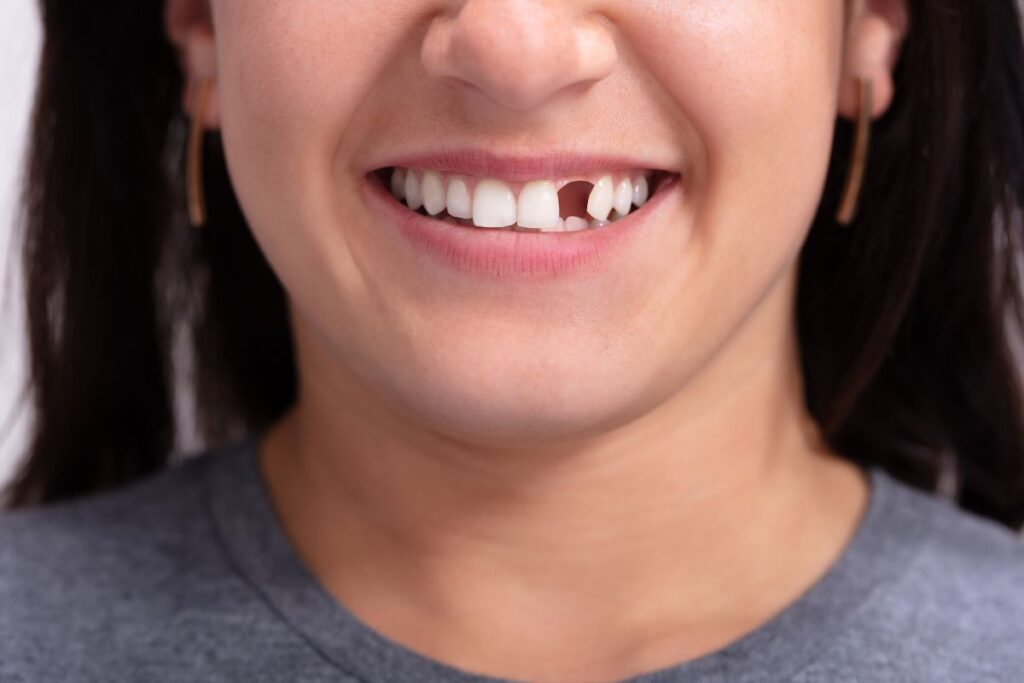
Most people connect missing teeth to confidence and chewing, not to how old they look. But why missing teeth age your face faster than you think in Tullahoma is a question worth taking seriously. Bone loss begins almost immediately after a tooth is lost. Over time, that loss reshapes your face in ways that no cream or skincare routine can reverse.
At Glick & Woods Dentistry, Dr. Kim Glick sees this pattern regularly. Patients often come in focused on appearance concerns, unaware that the real cause is dental. Understanding the biology behind facial aging empowers you to make timely, informed decisions.
How Missing Teeth Trigger Bone Loss in Patients
Your jawbone stays strong because tooth roots constantly stimulate it. Every time you bite or chew, those roots send signals that prompt the bone to rebuild itself. When a tooth is lost, that stimulation disappears entirely.
The body responds by reabsorbing the bone it no longer needs. This process — called resorption — starts within weeks of losing a tooth. After just one year, the bone in that area can shrink significantly in both height and width.
This is not a slow, invisible change. It is a structural transformation of your jaw. The surrounding teeth may begin to shift, and the gum tissue can recede further. These changes compound over time and accelerate visible facial aging.
- Bone loss begins within weeks of tooth loss
- Up to 25% of bone width can be lost in the first year
- Adjacent teeth drift into the empty space
- Gum tissue recedes as bone volume decreases
- Chewing forces redistribute unevenly to remaining teeth
Why Missing Teeth Age Your Face Faster Than You Think — The Visual Signs
The most visible sign of jawbone loss is a sunken or collapsed facial appearance. Patients often describe it as looking hollowed out around the cheeks and mouth. This happens because the lower third of the face loses the structural support it once had.
Lips begin to thin and fold inward without adequate bone beneath them. Deep lines form around the mouth, sometimes called marionette lines or smoker’s lines — even in people who have never smoked. The chin can appear more prominent as the jaw structure shrinks.
Patients with multiple missing teeth experience more dramatic changes. The entire lower face can appear to collapse upward, shortening the distance between the nose and chin. This is sometimes called facial collapse, and it is a direct consequence of untreated tooth loss.
These changes can make a person appear years — even decades — older than their actual age. The shift is gradual enough that many people attribute it to normal aging rather than a dental cause.
What Happens When Tooth Loss Goes Untreated
Delaying treatment does not freeze the situation in place. It allows progressive damage to occur at every level. Bone continues to resorb. Neighboring teeth continue to shift. The bite becomes increasingly uneven and unstable.
An uneven bite places excessive stress on the jaw joints. This can lead to discomfort and dysfunction that extends beyond the mouth. For patients experiencing jaw joint issues, understanding conditions like Temporomandibular Disorders (TMD) and self-care becomes especially relevant.
Chewing efficiency declines as well. People begin avoiding hard or crunchy foods. Nutrition can suffer as a result, affecting overall health and energy levels. What begins as a single missing tooth can quietly affect quality of life in multiple ways.
- Progressive bone resorption reshapes the jawline
- Neighboring teeth drift and may become loose over time
- Bite misalignment increases strain on jaw joints
- Chewing difficulties can lead to nutritional changes
- Speech may be affected depending on which teeth are missing
- Remaining teeth may experience accelerated wear
How Restorative Options Preserve Your Facial Structure
The good news is that modern dentistry offers effective solutions that do far more than replace a missing tooth cosmetically. The right restoration actively protects your jawbone and preserves the shape of your face.
Dental implants are the most comprehensive option available today. An implant is a titanium post placed directly into the jawbone. It mimics a natural tooth root and provides the stimulation needed to prevent bone resorption. A dental implant restoration can stop bone loss at the site and help maintain your natural facial contours for years to come.
Dental bridges and dentures can restore chewing function and appearance. However, they do not address bone loss directly since they sit on top of the gum tissue rather than within the bone. Implant-supported dentures offer a middle ground that provides more stability and some degree of bone preservation.
Dr. Kim Glick evaluates each patient individually. The best solution depends on how many teeth are missing, current bone volume, and your overall oral health. Early intervention always produces better structural outcomes than waiting.
When Is the Right Time to Seek Treatment?
The honest answer is: sooner than most people act. Many patients wait months or even years before addressing a missing tooth. By then, bone loss is already well underway. Treatment becomes more complex and requires additional steps to rebuild lost bone.
If you have recently lost a tooth, acting within the first few months gives you the widest range of options. Bone grafting may also be possible to restore volume that has already been lost. This can make implant placement viable even in patients who have waited longer.
If you are already experiencing facial changes, sunken cheeks, thinning lips, or a shorter lower face, it is not too late to help. Restorative dentistry can significantly improve both function and appearance even in advanced cases. Dr. Glick’s approach at Glick & Woods Dentistry combines clinical precision with genuine care for each patient’s long-term well-being.
Understanding why missing teeth age your face faster than you think in Tullahoma is the first step toward protecting your health and your appearance. Taking action sooner rather than later makes a measurable difference in outcomes. Schedule your appointment with our team.
Frequently Asked Questions
1. How quickly does bone loss start after losing a tooth?
Bone resorption typically begins within a few weeks after you lose a tooth. In the first year alone, significant bone volume can be lost at the site. This is why early evaluation and treatment planning are so important after any tooth loss.
2. Can dentures prevent the facial aging caused by missing teeth?
Traditional dentures restore the appearance of teeth and improve chewing, but they do not stimulate the jawbone the way natural roots do. This means bone loss continues beneath the denture over time. Implant-supported dentures provide better bone stimulation and help maintain facial structure more effectively.
3. Is facial collapse reversible once it has occurred?
Facial collapse from bone loss cannot be fully reversed, but restorative treatments can significantly improve both structure and appearance. In many cases, bone grafting combined with dental implants can rebuild lost volume. Results vary depending on the extent of bone loss and individual health factors.
4. Do dental implants really stop bone loss?
Yes. Dental implants are the only tooth replacement option that directly stimulates the jawbone the way a natural root does. This stimulation prevents resorption at the implant site. Many patients who receive implants maintain healthy bone levels for decades.
5. What if I am missing multiple teeth — am I still a candidate for implants?
Multiple missing teeth can still be treated with implant-based solutions. Options range from individual implants to implant-supported bridges or full-arch restorations. Dr. Kim Glick evaluates bone density and overall oral health to determine the most appropriate and effective plan for each patient.